Archive | Tips RSS feed for this section

The Bolivia Roundup

11 Jun

The Statistics

Number of days spent in country –  19

Cities/towns visited – Tupiza, Uyuini, Potosi, La Paz, Coroico, Copacabana, Isla del Sol and various little settlements in the southwestern part during our jeep tour.

Number of different lodgings – 10

Flights – 0

Bus journeys – 6

Combi/collective/taxi  journeys – 3 plus a 4 day jeep tour.

Days of rain – 3

Budget
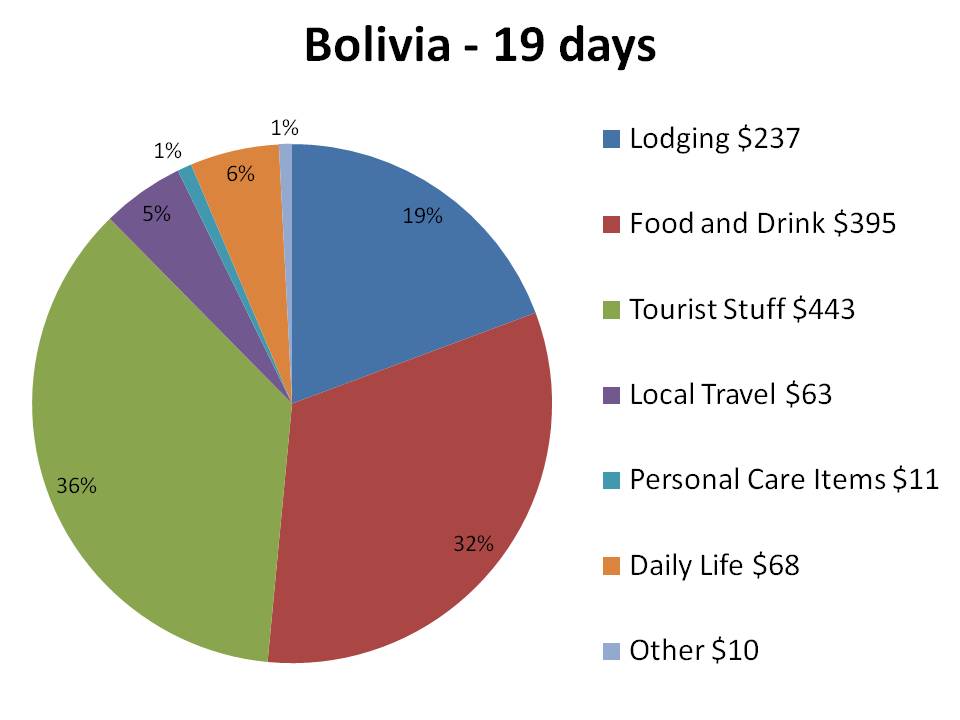
Total US dollar amount spent – $1497.36

Average cost per day, per person (excluding the visas, which cost $135 each) – $32.30

Average lodging cost per night, per person – $8 – We were able to spend most nights in private rooms with private bathrooms.

Most expensive lodging – Both places we stayed in La Paz (Hotel Avenida, and the Adventure Brew B&B) were about $11.40 per person for a private room with private bathroom.  Adventure Brew was a much better deal as they had consistent wi-fi, pancakes for breakfast, and a free beer every night.

Least expensive lodging – $3.50 per person in a nameless hostel in Coroico.  We had a 3 person room with a shared bathroom.

Average food/drink cost per day, per person – $12.35 We ate out for every meal, and drank like fish. We had a mix of street food and restaurant meals, as well as a healthy amount of snacks… usually in the form of pastry.

Best

Hostel Adventure Brew B&B in La Paz.  There are two Adventure Brews, almost right next door to each other.  We stayed in the B & B because it was more chilled out than the actual hostel.  We had a private room/bathroom for $11.40 per person including a pancake breakfast (REAL pancakes!) and a free beer for each person every night.  They had the most consistent internet of anywhere we stayed in Bolivia.

Food – The food in Bolivia gets a bad rap, but truth be told, we ate pretty well there.  Perhaps it’s that we went in with very low expectations.  Maybe it’s just that the value is just so great.  It could be that half of what we ate was pastry, which was delicious.  Whatever it is, we have lots to say in the ‘food’ category!
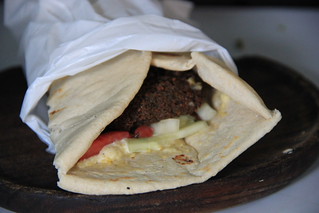
Falafel at La Mia Pizza in La Paz – A hole in the wall that serves some pretty good falafel at cheap prices (15 Bolovianos for one huge sandwich).  It’s on Calle Illampu near the corner of Santa Cruz.  It’s just past a big outdoor/camping shop.  Look for the crowd of hippies outside.

4060 in Potosi, Bolivia.  Named for the altitude of the city (incidentally, Potosi is the highest city in the world at 4,060 meters, which is 13,320 feet!), the food at 4060 is definitely one of the better meals we had in our last 6 weeks in South America.  It’s a tad pricey for Bolivia, which means a plate will cost you about $8.  They have a big variety of dishes, both local and international, as well as a variety of smoothies and desserts to choose from.  It’s just off the main plaza, going uphill on Hoyos.

Alamos  in Tupiza on Avaroa Santa Cruz –

This massive heap of food cost all of about $3!

The food here is average for Bolivia, but the portions are gigantic and the prices are dirt cheap. The biggest draw for me was the décor…which was insane.  Walking into Alamos was like stepping into another dimension.  There are knick-knacks everywhere, most of which are western themed.  A huge steer skull with glowing green lights in the eye sockets stares down at patrons from the top of a wall that is plastered with publicity photos of celebrities, photos of tourists sitting in the booths, old movie posters, random license plates, and all kinds of other junk.  It’s incredibly entertaining.  Huge meals with liter beers will set you back about $5.

Inside Alamos.

When you find this guy, you’ve found the best chicken dinner in Bolivia.

Chicken place in Uyuni – Uyuni is a shithole.  Sorry, but it is.  The most redeeming thing about the place (other than the salt flats) was the fantastic chicken dinner we had for…wait for it…about $2.  We had huge plates of the standard rice and french fries with 1/4 of a chicken.  It was some of the best chicken I’ve had, ever.  It’s roasted on a spit right outside the restaurant, and is perfectly cooked.  Go to the corner of Potosi and Bolivar.  Head down Bolivar going away from downtown until you see the guy in the picture.  There’s no name.  We were the only gringos in the place, and some of us (gentlemen, I’m looking at you here…) had more than one plate.

Carla’s Garden Pub in Coroico – Just off the main square, towards the bus station, there are stairs leading downhill from town.  If you go down them you’ll run into Carla’s Garden Pub, a lovely place to while away an afternoon.  There are snacks, cheap drinks, hammocks, a cat, and wifi!  It feels more like Thailand than Bolivia and we spent a few afternoons drinking Tequila Sunrises as we watched the sun set over the hills.

Activity

4-Day jeep tour to the Salt Flats – I will write an entire post about this at some point.  We took a tour of south-west Bolivia through La Torre Tours, and started from Tupiza.  We saw some crazy landscapes, culminating in the huge salt flats outside of Uyuni.  If you have the time, it’s a great trip.  If you don’t, get yourself to Uyuni and just do a one-day of the flats, it’s totally worth it.

Riding horses outside of Tupiza. Photo by Bryan of http://www.happytobehomeless.com

Horseback riding – You can’t ride horses for this cheap anywhere else in South America.  We went on a 4 hour ride outside of Tupiza, near where Butch Cassidy and the Sundance Kid met their demise.  Incidentally, make sure you check around and find a place that will give you helmets…our ridiculous cowboy hats would not have done us much good had we suffered a fall.

Worst

The worst is really a relative term in this case.  There were plenty of completely mediocre, and some downright awful, places we encountered…but…it’s Bolivia and that’s just how it goes.  There wasn’t anything in particular here that we could really single out as being more terrible than was tolerable for the situation.    Except maybe the freezing cold showers.  Especially the one in Uyuni.

The Argentina Roundup

28 May

The Statistics

Number of days spent in country –  43

Cities/towns visited – Mendoza, Bariloche, El Bolson, Esquelle, El Calafate, El Chalten, Ushuaia, Buenos Aires, Iguazu Falls, Salta, Humahuaca, Purmamarca, Cafayate, Angostaca.

Number of different lodgings – 12 hostels and a couchsurf

Flights – 1

Bus journeys –  26

Combi/collective/taxi  rides – 9

Bike Rentals – 1

Days of rain – 4

Budget

Total US dollar amount spent – $5522.62

Average cost per day, per person – $64.00

Argentina is not as cheap as it used to be.  Our ‘Local Travel’ category of the budget was by far the biggest chunk of spending here – long distance buses are triple the cost that they were in 2009, and flights are as expensive for foreigners on the domestic airlines.

Average lodging cost per night – $15.35 per person.  Hostels were pricey in Argentina compared to other places in South America.  We ended up in dorms often, though we went for a double room, even with a shared bath, in a few places.  You could do cheaper, especially if you are willing to stay in the party factory dorms, or sacrifice location or cleanliness.

Most expensive lodging – Reina Madre Hostel in Buenos Aires – a private room with shared bathroom was $23.25 per person.  The second most expensive was the Freestyle Hostel in Ushuaia which was $20.50 per person for a DORM.

Least expensive lodging – $9.30 per person for a dorm room in a little hostel in Angostaca.  We got stuck there overnight while on a road trip through northern Argentina.

Average food/drink cost per day (per person) – $14.30 – We consumed an obscene amount of cheap empanadas, usually for lunch.  We often cooked dinners in at the hostels because of the high cost of eating out.  We did go out for dinners sometimes though, or ate at the hostel when they had an asado night.

The Best

Empanadas!

Hostel Empedrado in Mendoza.  They have private rooms as well as dorms, clean bathrooms, TWO kitchens with plenty of cookware, a small pool, hammocks, free glass of wine every night, free empanada making class, good wi-fi…and FREE LAUNDRY!!!  It’s just an overall winner.  It is a little bit outside of downtown, but not more than a 10 minute walk.  You can book online, and if you’re headed there in the summer make sure to ask for a room with air-conditioning since some only have fans.

Hiking up to Fitz Roy in El Chalten. Looks like a fake background…but it’s not, it’s just a bad exposure!

El Chalten – Yeah, the town.  If you like mountains you will LOVE El Chalten.  There are multiple day hikes that get you way out into the hills with some of the most spectacular mountain scenery we’ve encountered.  Take your time and spend more than a hot second there, you won’t regret it.

Big Ice Tour in El Calafate – Even though we got ripped off by the travel agent who sold us our tour, this still goes down as one of our favorite activities.  It really was worth it, especially if you’ve never been on a glacier.  If the cost is too steep for you, look into a trek on the Viedma Glacier out of El Chalten.

Taking a break from biking in Bariloche

Biking around the Circito Chico in Bariloche – We haven’t gotten around to posting about this ride, but it’s a 25 kilometer ride around beautiful meditteranean colored lakes just outside of Bariloche.  You can rent a bike for the day and set out at your leisure.  There are many places to stop along the way for picnicing, swimming, or just gawking at the scenery.  The bike rental will only set you back about $18 and you can get there with public transportation.  Your hostel should be able to reserve you a bike, otherwise any travel agent in town can also, just make sure they don’t charge a commission for it.  You’ll get a map from the bike place, but don’t worry, it’s a loop and basically impossible to get lost.

The Worst

We really loved almost everything in Argentina, and the one major exception was Hostel Pudu in Bariloche.  We heard that it was fantastic, and perhaps it used to be, but now it’s just run down despite the bright and shiny website.  One of the hostel owners spent more time getting high with the guests than doing other things…like cleaning the bathrooms, which were disgusting.  There was a pretty high price tag for a dorm room, and I have to admit to sheer laziness or we would have moved after the first night.

Packing List Part 4 – Miscellaneous Gear

12 Mar

It’s time for another installment of the packing list series!  If you haven’t checked them out already, head over to our “Things We Carry” page and check out our first three lists – ‘Clothing, ‘Medical and Toiletries’ and ‘Electronic Gear’.

We’ve tried to be as prepared as possible for situations that we know we’ll encounter, but we also wanted to make sure that we were bringing things that were durable and that we’d use regularly.  For the most part we did really well in that regard, especially when it comes to the miscellaneous gear that we cart around.  There are a few exceptions though, the biggest being the pacsafe cable.  This was on a lot of ‘must-have’ lists we looked at, so we got one…and we’ve never used it.  Most of the hostels we’ve stayed in have had lockers, and when they haven’t, we just lock everything up in our packs using our regular luggage locks.  I’ve never felt the need to lock a pack to something, though I suppose that could happen somewhere down the line.

The other thing we haven’t really used much have been the backpack rain covers.  We’ve seen people who keep them on practically all the time, but we just haven’t found them necessary at this point.

Click on over and check out  the full list of our miscellaneous gear.

Packing List Part 2 – Med Kit/Toiletries

23 Jan

Like with our clothing list, we thought a lot about what we’d need to bring for medical and personal supplies.  At this point we’ve found that it’s been fairly easy to replenish most of the items we need as we use them up, and often we can find brands we recognize.  There have been a few items that we haven’t found, most notable are Band-aids of the fabric variety (I swear, those stay on way longer!) and athletic tape.

The only antibiotics we brought were a few Cipro pills, because everything else you can purchase easily over the counter.  When we got sinus infections in Peru we just waltzed right into a pharmacy and asked for the medication, which totaled less than $35 for both of us.

We try to stay organized and so far having everything in assorted sizes of zip-lock bags has worked well.

Stay tuned, in the next few weeks we’ll put up our lists for tech-gear and all the other miscellaneous items.  You can always check in at Things We Carry to see if we’ve updated anything.

6 Lessons From The First 6 Weeks

18 Dec

Traveling is perhaps the best teaching tool there is.  Here’s a smattering of some of things we’ve learned, or re-learned, since the start of our journey.

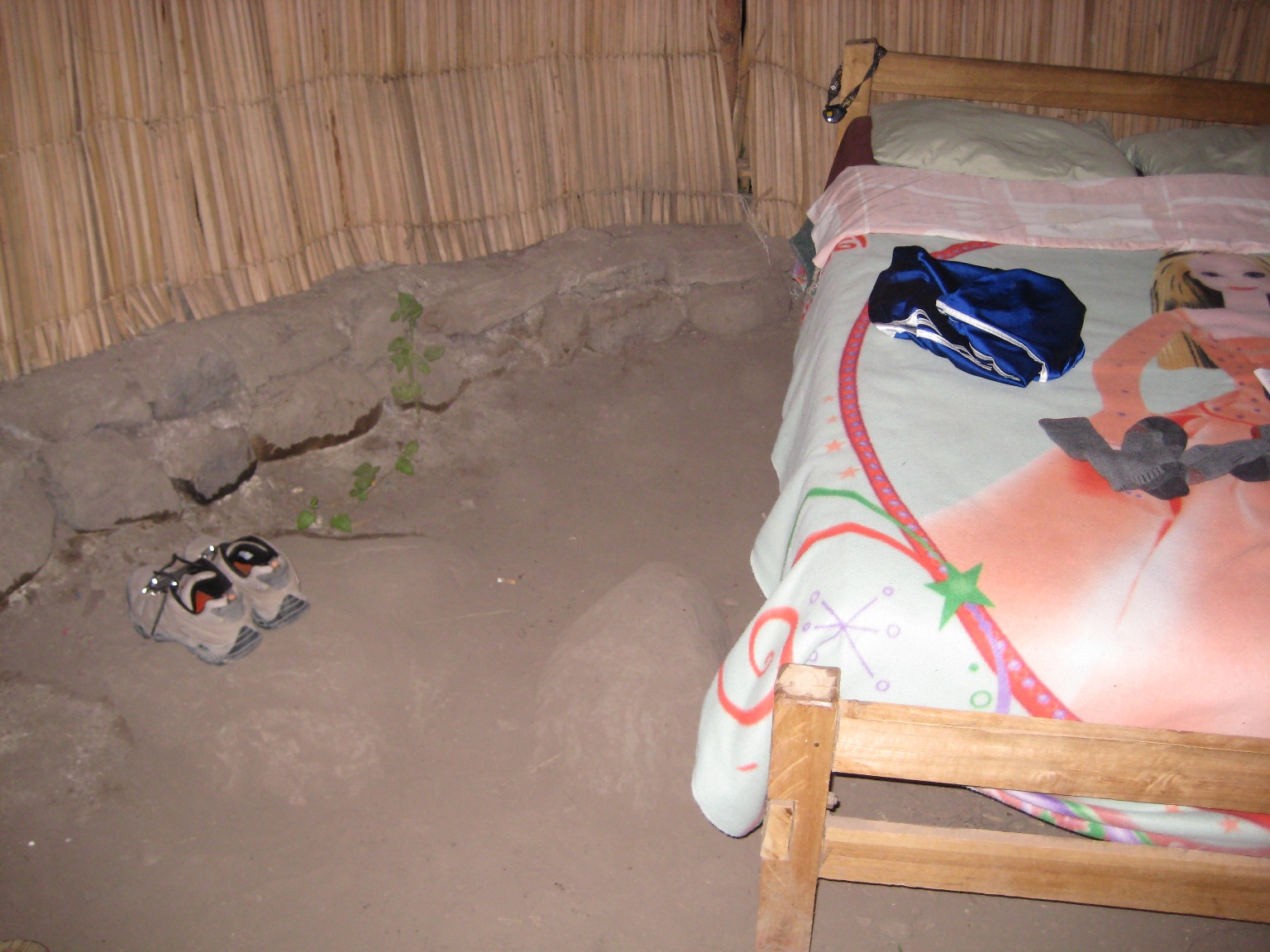
We took this room after a full day of hiking and only after we'd had a chance to rest did we realize there was a dirt floor...

1) Don’t settle for a bad room/bad price just because you are tired.  This is a lesson we’ve had many times before, but it can be a difficult one to remember in the moment.  After an 18 hour bus ride, a grueling hike, or 45 minutes looking at possible hostels, it’s tempting to just give in and take whatever you are offered – be that a rip-off taxi fare, or a room with questionable bed sheets.  It’s easy to beat yourself up later with “should have” or “could have” scenarios, so to avoid those altogether just give yourself a break, literally.  Take 5 minutes to sit down somewhere and regroup before you delve back into the negotiations.  Do you really not have the energy to go any further or to play the haggling game?  If not, then take what you can get, and chalk it up to necessity.

2) Find the local markets.  If you’ll be in one spot for a few days, it’s a great idea to find the local produce markets.  Typically you’ll be able to get a huge variety of fresh fruits, breads, cheeses and meat at a huge discount compared to most grocery stores.  In addition to general supplies, most markets have food stalls where you can get a meal or snack for only a few dollars.  It’s a great way to save some cash and interact with the locals.

By Orin Zebest on Flickr

3) Organize your photos regularly.  It’s easier than you think to rack up thousands of photos over the course of a few weeks.  If left unattended it can take hours of tediously going through pictures, deleting the ones you don’t want, and trying to figure out where each one was taken.  Sitting down to organize them regularly will help you tame this beast of a chore.

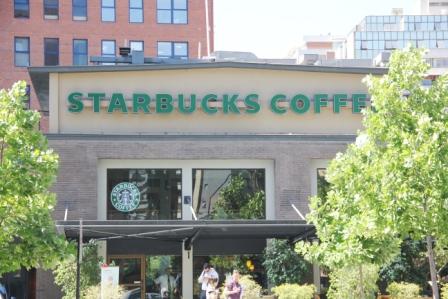
4) Starbucks and KFC always have clean, free bathrooms. It may be abrasive to see so many chain businesses popping up abroad, but there are a few positives to this phenomenon.  Not only does Starbucks always have free, clean bathrooms, but you can also wait around for your night bus in a much more comfortable spot than the floor of the local station.  As a bonus you don’t even have to buy anything to while away the evening on one of their couches.

By javajoba on Flickr

5) “Travel Size” doesn’t always cut it.  When we started making our packing lists,  we had to focus a lot on how to save space or weight in our packs.  The first inclination was to bring all our toiletries in travel size.  This has worked out well for some things (the miniature brush for example) but not for others.  Tiny containers might be fine for a few weeks, but for long-term travel it just doesn’t make sense to have everything in such small quantities.  That doesn’t mean you need to buy in bulk either, but for our daily use items like sunscreen and toothpaste, we just carry around a normal size container and they don’t add enough bulk or weight to our bags to be a problem.

By Spec-ta-cles on Flickr

6) Make time for “normal”.  Long term travel is not just a huge extended vacation.  Ok, maybe it is, but it’s also your life.  You need things like shampoo and kleenex, or a day to just run errands or have some down time.  Make a point to take a day to rest here and there.  Get your laundry done.  Restock your personal supplies.  Sometimes it’s the little things that make you feel like a regular person again, instead of like a manic tourist.